
Problem
Procedural asset workflows become difficult to trust when preview, export, packaging, and smoke verification live in separate manual steps.
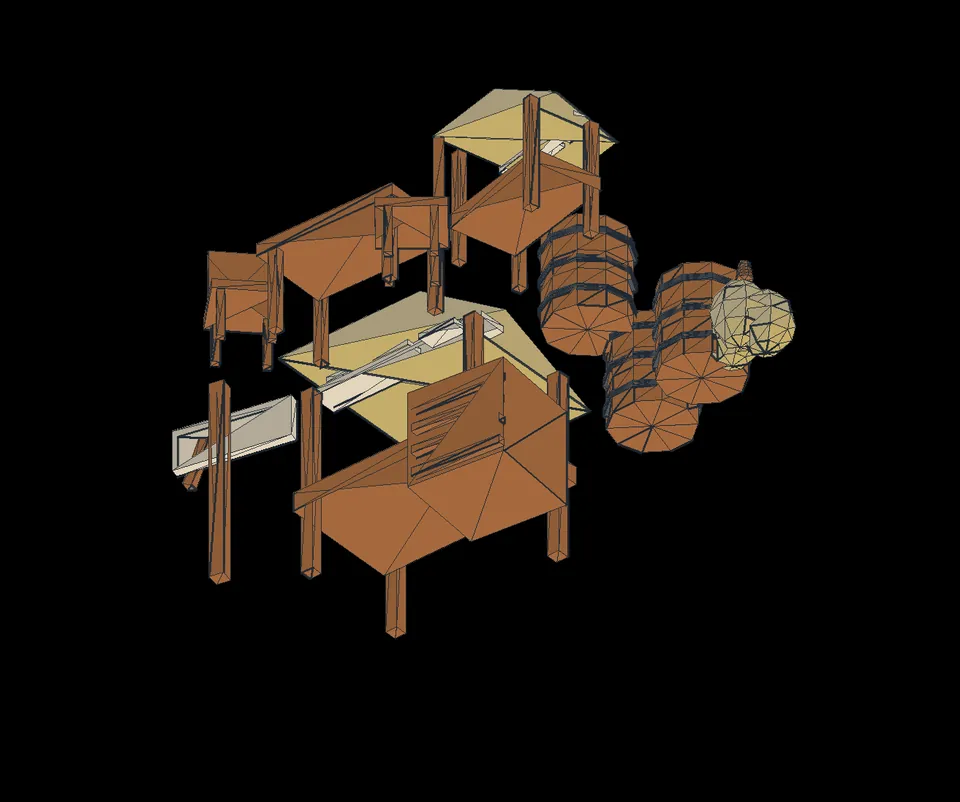
A recipe-driven toolkit for generating lowpoly assets, biome layouts, previews, exports, and release-ready packages.
Problem
Procedural asset workflows become difficult to trust when preview, export, packaging, and smoke verification live in separate manual steps.
Solution
Connected recipe packs, quality profiles, workflow wrappers, and clean-install verification into a reproducible Godot-first content pipeline.
Result
Closed release-hygiene work around patch and stable-candidate packaging with smoke evidence and archive integrity checks.
Current capabilities
Recipe-driven asset generation
Preview and export packaging
Smoke verification for release hygiene
Preparing
More polished public proof media
Additional workflow walkthroughs
Clearer field-test reporting from the studio side
How it works
Asset recipes describe modular low-poly assets, material rules, and export expectations.
Sockets, anchor points, attachment points, pivots, origins, and transforms define how modular pieces connect.
LOD, collider, and physics proxy outputs are validated through smoke gates and reproducible build checks.
Build proof
Source smoke and clean-install smoke were preserved around release packaging.
Archive integrity and dependency hygiene checks were documented for release readiness.
Heavy 3D/runtime content remains external; the website uses screenshots and case-study diagrams.
Current status
Case Study. This page presents a lightweight case study and links outward for repositories, releases, demos, or heavy artifacts instead of bundling them into the website runtime.
Availability
Technical case-study surface. Repository exists, but the site does not present it as an opened end-user tool.
Terminology
Stack